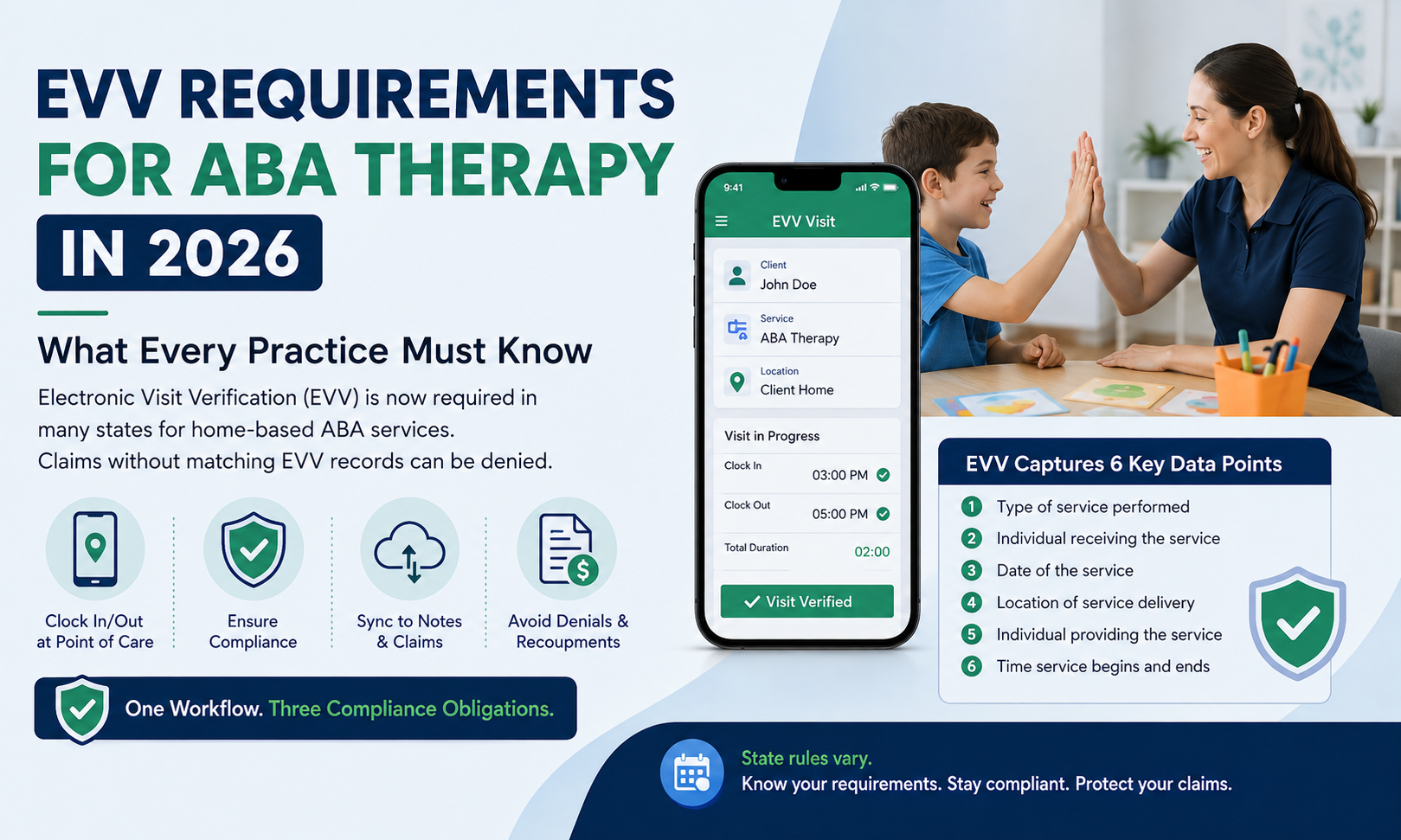
EVV Requirements for ABA Therapy in 2026: What Every Practice Must Know
Does EVV apply to your ABA practice? Learn the key Electronic Visit Verification requirements for home-based ABA services, how EVV affects Medicaid claims, and what practices need to know to stay compliant in 2026.
If your practice delivers ABA services in clients' homes and bills Medicaid, Electronic Visit Verification isn't optional — and in a growing number of states, claims that arrive without matching EVV records aren't just flagged anymore. They're denied.
Here's what EVV actually requires, why enforcement tightened, and how to run a home-based ABA program without EVV becoming a second job.
What EVV Is (and Why It Exists)
The 21st Century Cures Act required state Medicaid programs to implement Electronic Visit Verification for personal care services and home health care services. EVV electronically confirms six data points for each visit:
- Type of service performed
- Individual receiving the service
- Date of the service
- Location of service delivery
- Individual providing the service
- Time the service begins and ends
The goal is fraud prevention: proving the visit happened, where it happened, with whom, for how long.
Does EVV Apply to ABA?
It depends on how your state classifies the service — and this is where practices get burned. ABA delivered in the home falls under EVV in states that classify it (or the home-based portion of it) as a personal-care or home-health-adjacent service, or that have simply chosen to extend EVV to home-based behavioral services. Other states exclude clinic-delivered ABA entirely.
The practical questions for your practice:
- Which of our service locations trigger EVV? Clinic sessions typically don't; home and community sessions may.
- Which payers? EVV is a Medicaid requirement — but MCOs administering Medicaid benefits each implement it through their own aggregator arrangements.
- Which aggregator does our state use? Most states designate a system (commonly Sandata, HHAeXchange, Netsmart/Tellus, or Therap, depending on state) that provider EVV data must reach — either via the state's own tool or an approved third-party system that integrates with it.
EVV Requirements by State
| State | Does EVV Apply to Home-Based ABA? | Effective / Enforcement Date | Designated Aggregator | Alt-EVV Allowed? | Official Source |
|---|
The 2026 Shift: From "Pay and Warn" to Hard Denials
Early EVV rollouts were forgiving — claims without EVV matches were paid with warnings while providers adjusted. That grace period has been ending state by state. The pattern practices are hitting now:
- Claims auto-matched against the EVV aggregator record before adjudication
- No matching EVV record → claim denied or suspended, regardless of documentation quality
- Mismatched times (session note says 3:00–5:00, EVV clock-in says 3:12) creating partial-unit discrepancies and recoupment risk
That last one matters most for ABA: your 15-minute-unit codes (97153 and 97155) are billed off start/stop times. When EVV times, session-note times, and claim units disagree, you've handed an auditor a finding.
What Compliant EVV Workflow Looks Like for ABA
Clock-in/out at the point of care. Technicians verify visits on a mobile device (GPS-stamped) at session start and end — not reconstructed at day's end. Late manual edits are the top EVV audit flag.
One source of truth for times. The same start/stop times should drive the EVV record, the session note, and the claim units. If your staff enter times in three systems, you will eventually bill units EVV doesn't support.
Exception handling with reason codes. Devices fail; visits move. States allow manual corrections with documented reason codes — but track your exception rate. High manual-edit percentages invite audits.
Aggregator submission you don't think about. Whether via the state system or an integrated alt-EVV vendor, verified visit data must land in the state aggregator before (or with) the claim.
TherapyPM was built for exactly this: technicians clock in and out on mobile at the home, the verified times flow into the session note and onto the claim, and the EVV record submits to the aggregator — one workflow, three compliance obligations.
Frequently Asked Questions
Does EVV Apply to Telehealth ABA Sessions?
Generally EVV targets in-person home visits; telehealth typically follows telehealth billing rules instead — but confirm your state's guidance.
Do Parents/Caregivers Have to Sign?
Some states require recipient verification (signature or attestation) at visit end; include it in your workflow where mandated.
What About School or Community Locations?
State-dependent — some EVV programs cover any non-clinic location, others only the home. This belongs in your state table.
Get Ahead of Enforcement
The practices struggling with EVV are the ones treating it as a billing-department problem. It's a point-of-care workflow problem — and once the workflow is right, compliance is a byproduct. TherapyPM handles mobile verification, time-matched documentation, and claims in one system, and the TherapyPM RCM team can review your current EVV denial exposure state by state.
See EVV-ready scheduling in TherapyPM · Get an EVV compliance review
Ready to simplify your therapy practice?
Join 500+ clinics already using TherapyPM to streamline billing, documentation, credentialing, and more.
More in ABA
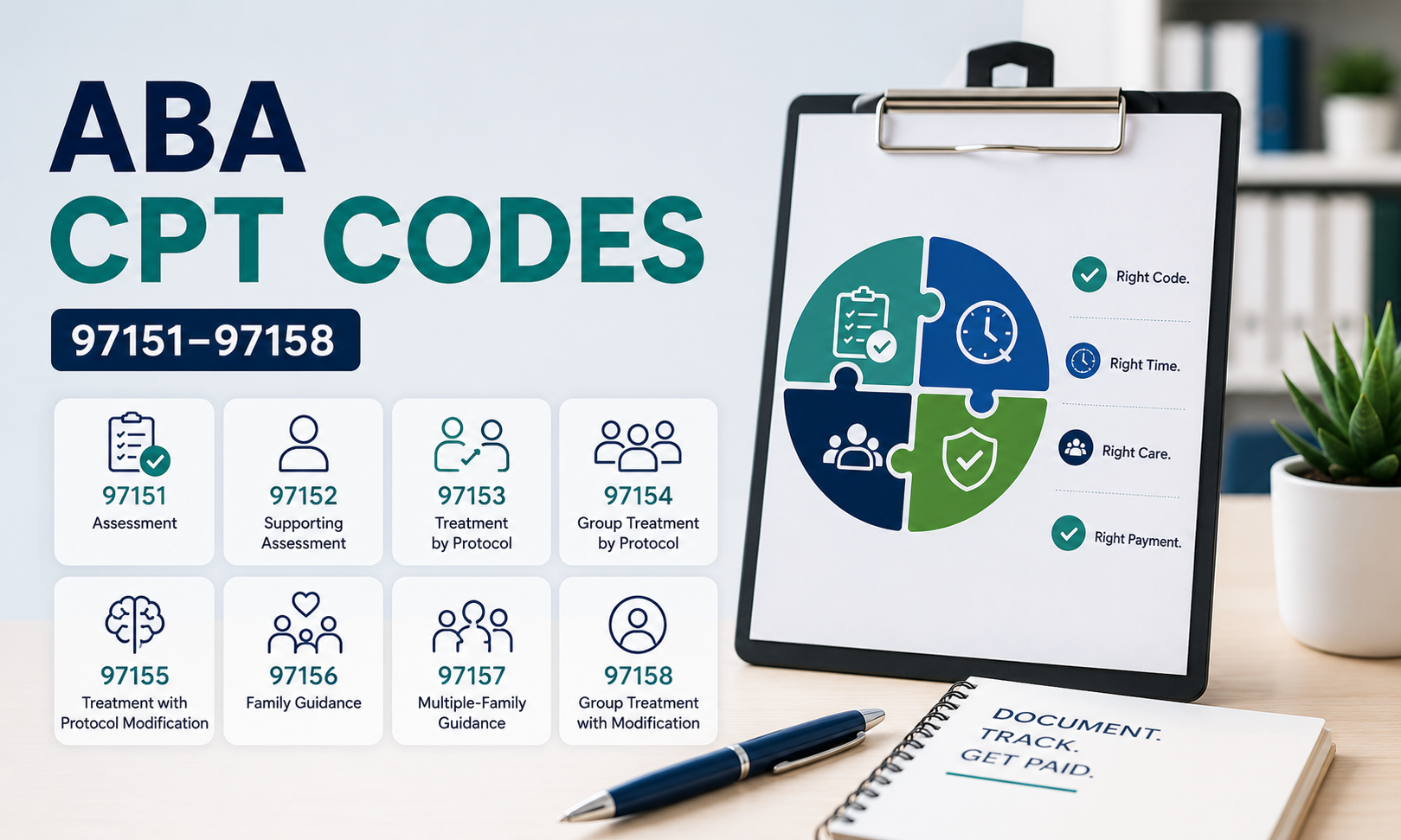
ABA CPT Codes 2026: The Complete Guide to 97151 – 97158 (With Denial Fixes)
Aug 4, 2026
8 min read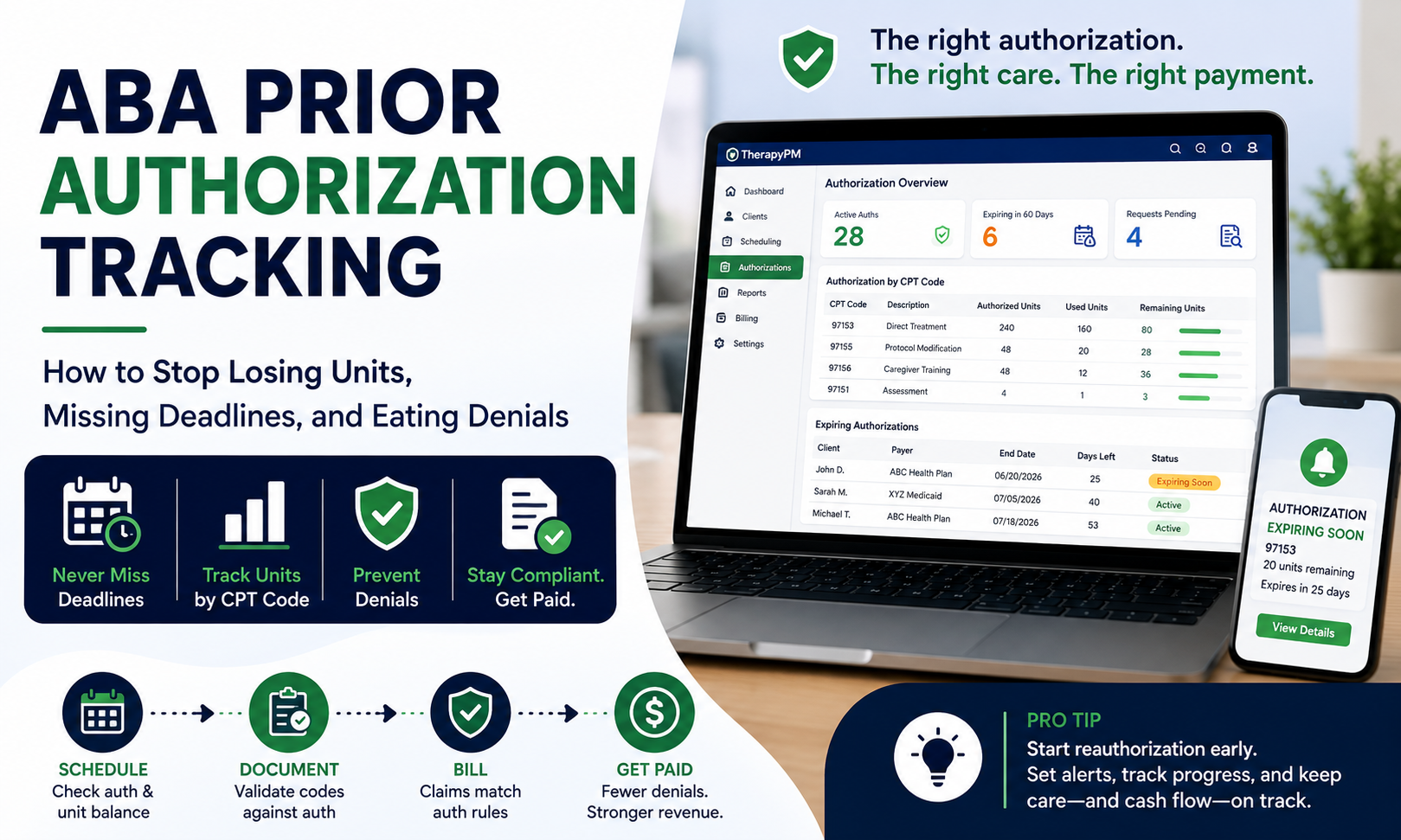
ABA Prior Authorization Tracking: How to Stop Losing Units, Missing Deadlines, and Eating Denials
Aug 4, 2026
5 min read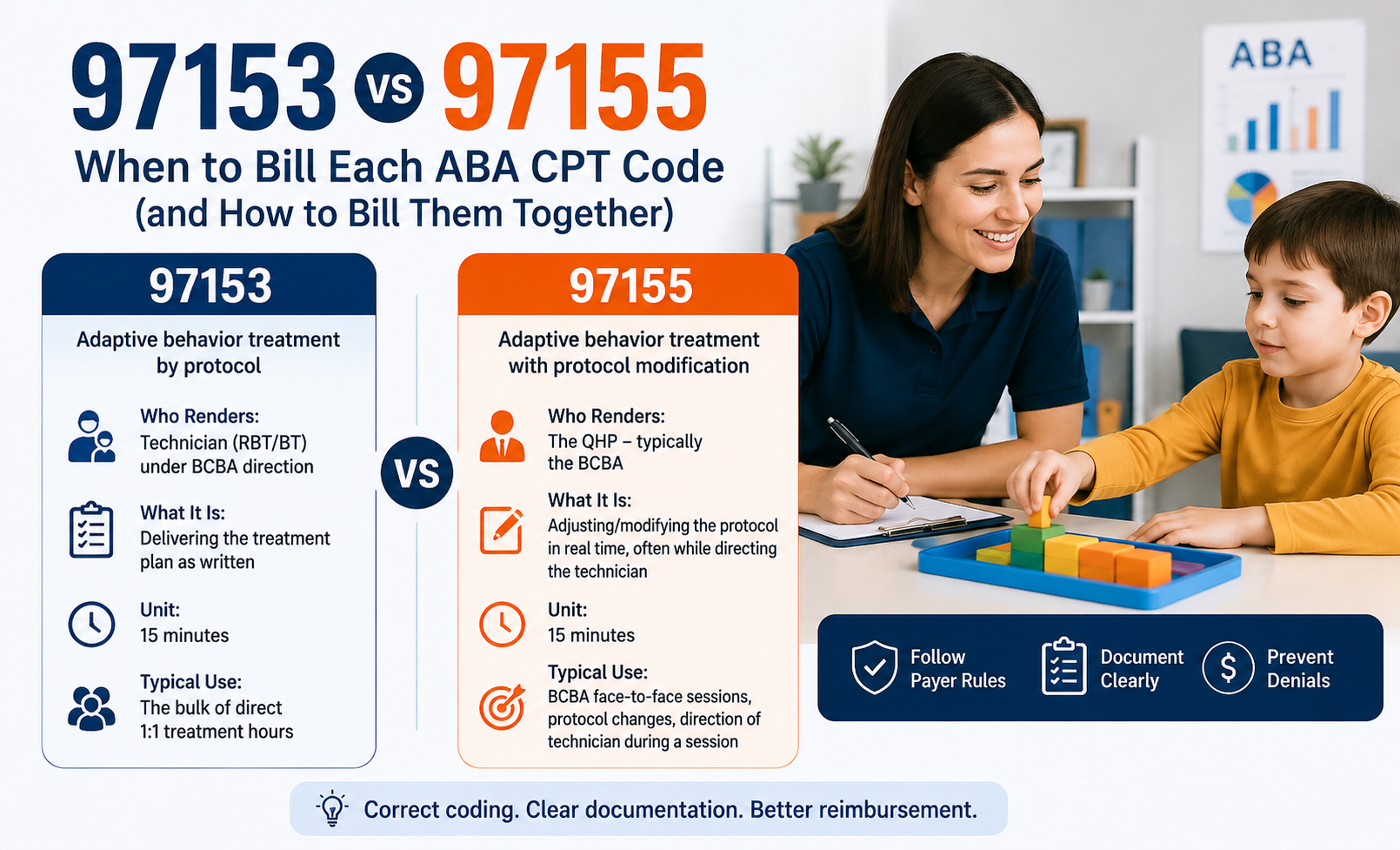
97153 vs 97155: When to Bill Each ABA CPT Code (and How to Bill Them Together)
Aug 4, 2026
5 min read